In The bus can take us to the centre, articles, pronouns, prepositions and an uncontrasted auxiliary are often weak: the /ðə/, can /kən/, to /tə/. Content words carry the main beats. Read it again stressing can to correct someone who says it cannot. Weak forms depend on focus; keep the message intelligible.
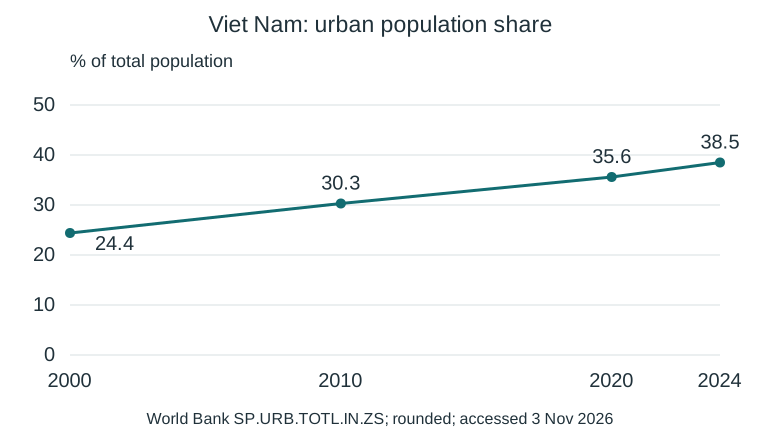
For a report on a fictional neighbourhood that is becoming busier, I would begin with a clear question rather than a dramatic photograph. I would compare the same road section and time period, then consider walking safety and access to services. A new housing block may provide homes while also increasing demand for schools or drainage. A national urban-share graph answers a different question from a local access survey, so the two must be labelled separately. I would ask who collected each figure, what geographic area it covers and whether the boundaries changed. The report should include residents’ concerns without pretending that one comment represents everyone. More buildings may mean more homes, yet that does not automatically mean that every resident benefits equally. Our conclusion should explain the evidence and the questions still open.
Follow-up: Can the national graph show that this neighbourhood’s road is safer?
Response: No. A local safety claim needs appropriate local evidence, not a national population share.